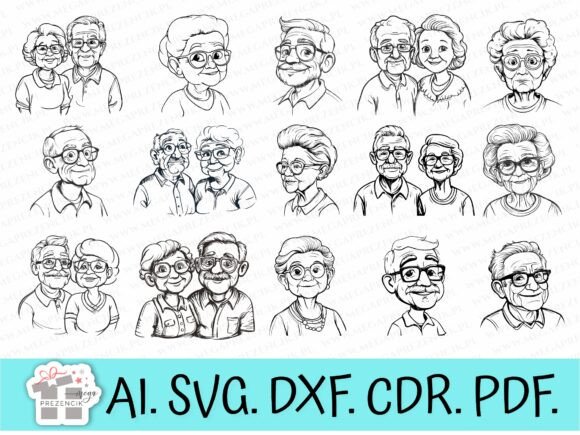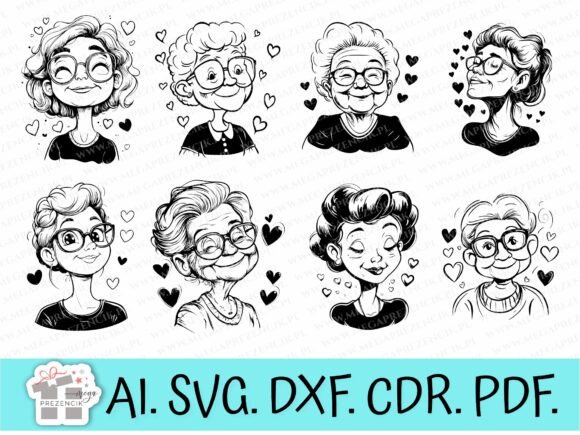
Grandma SVG Laser Vector Graphics
A Designer’s First Look: Warm, Nostalgic—But Ready for Stitching?
Opening the Grandma SVG Laser Vector Graphics set, I felt that familiar pull—the kind you get when a design whispers “grandmother’s kitchen,” “hand-stitched love note,” or “heirloom gift box.” The 18 vector patterns lean into soft curves, gentle typography, and motifs like teacups, rocking chairs, floral wreaths, and handwritten “Grammy” scripts. Visually, it’s cohesive—not overly cutesy, not too ornate—and clearly built for emotional resonance rather than trend-chasing. That said, as an embroidery designer who ships hundreds of custom totes, baby onesies, and boutique aprons each season, my first question isn’t *“Is it pretty?”*—it’s *“Will it stitch cleanly at 3.5 inches on a cotton twill tote, hold up after six washes, and still feel special in a customer’s hands?”*
Real-World Test: Embroidering a Personalized Linen Pillow Cover
Last week, I pulled one of the simpler designs—a circular monogram-style “Grandma” with vine accents—to embroider onto a natural linen pillow cover for a client’s 70th birthday. I chose it because the layout was balanced, the negative space generous, and the line weight consistent. It stitched cleanly with minimal thread breaks, even on the slightly nubby texture of the linen. The satin stitch borders held their shape, and the fill areas didn’t puff or shadow—thanks, I suspect, to thoughtful vector simplification. Customers notice that difference: clean edges read as “crafted,” not “cut-and-paste.” This is where Grandma SVG Laser Vector Graphics shines—not as clipart, but as a foundation for something tactile and intentional.
Where It Fits Naturally (and Where It Doesn’t)
These graphics work best when translated into embroidery files for projects where warmth and legibility matter more than hyper-detail:
- Custom apparel: Sweatshirt chest logos, toddler sweatshirt backs, and unisex crewnecks—especially with lighter thread on heather grey or oatmeal fabric.
- Personalized gifts: Embroidered patches sewn onto denim jackets, tea towel hems, or baby blankets—where simplicity reads as sincerity.
- Boutique merchandise: Small shop products like ceramic mugs (as laser-engaved decals) or printed + embroidered aprons—leveraging both the SVG and vector versatility.
- Holiday & milestone items: Grandparents’ Day cards (as printable mockups), nursery wall art, or wedding guest book covers—where emotional tone outweighs technical complexity.
But be cautious with:
- Tiny hoop sizes (<4”): Some of the more intricate wreath or script-based designs include fine interior lines that may collapse or require digitizing adjustments.
- Stretchy or thin fabrics (like jersey or chiffon): Without proper stabilizer and digitization tweaks, delicate flourishes can distort.
- Dark or textured backgrounds: A few designs use light-on-dark contrast in the vector preview—test how those translate to black thread on navy terry cloth or charcoal fleece.
- Curved surfaces (caps, curved pockets): Simplified outlines handle this well; dense fill areas or tight corners may need re-hooping or manual path editing.
What It Adds to Your Finished Product—Beyond Aesthetics
Using Grandma SVG Laser Vector Graphics doesn’t just add decoration—it adds narrative weight. A hand-embroidered “Grandma’s Recipe Box” design on a canvas tote tells a story before the customer reads a word. That builds trust: buyers associate clarity, balance, and intentionality with your craft business. For Etsy sellers, that means higher perceived value and fewer “Does this look exactly like the photo?” messages. For small shop owners, it supports brand consistency across product lines—from embroidered patches to digital greeting cards—because the core illustration assets are unified and scalable.
It also streamlines workflow. Since the set includes AI, CDR, DXF, SVG, and PDF formats, I can import directly into my digitizing software, trace key paths, and adjust stitch types without redrawing from scratch. That’s invaluable when turning one vector into multiple embroidery file versions: a simplified running-stitch outline for baby onesies, a dense fill + satin border for a patch, or a low-density version for lightweight tea towels.
Practical Notes Every Embroidery Designer Should Check
Before stitching—or listing your first finished product—take these steps:
- Test on scrap fabric first, using your actual thread colors and stabilizer combo. Linen behaves differently than cotton poplin; fleece hides density issues until it’s too late.
- Review stitch density. Overly dense fills heat up delicate fabrics and increase wear. If your digitized version feels heavy, reduce fill % or switch to a lighter underlay.
- Confirm hoop size compatibility. Not all 18 designs scale equally—some may need resizing to fit standard 4x4 or 5x7 hoops without losing proportion.
- Inspect small details. Tiny hearts, script serifs, or leaf veins may vanish in satin stitch unless manually adjusted or converted to running stitch accents.
- Test black-and-white mockups. What looks charming in color might lack contrast when stitched in ecru on cream linen—or vice versa.
- Use appropriate stabilizer. Tear-away works for stable wovens; cut-away is safer for knits or heirloom pieces meant to last.
- Verify licensing terms. These are vector graphics for laser engraving and design use—but confirm whether commercial embroidery rights (e.g., selling finished embroidered totes) are included before launching your Etsy listing.
Final Thought: A Thoughtful Tool, Not a Magic Button
Grandma SVG Laser Vector Graphics won’t replace skilled digitizing—but it does remove the guesswork of starting from zero. As an experienced designer, I appreciate that it meets a real need: creating heartfelt, market-ready embroidery projects without sacrificing authenticity. It’s especially valuable for craft business owners juggling client deadlines, holiday rushes, and small-batch production. Used with care—tested, adapted, and stitched with intention—it becomes more than a graphic. It becomes part of someone’s story. And that’s the kind of design that sells itself.