Decorative Boxed Coasters: Laser Cutting Stands Review
When a client approached me with a rebranding project for a small-batch handmade pottery studio, I knew immediately that the visual identity needed to bridge rustic warmth and refined precision. The Decorative Boxed Coasters Laser Cut Svg caught my attention as a potential anchor for the packaging and promotional materials. My first impression was clean structure meeting ornamental charm — the kind of balance that feels intentional without screaming for attention.
The mood this asset creates sits comfortably between modern craft and heritage sensibility. The geometric framework paired with decorative corner detailing feels like something you would find in a curated boutique hotel or an upscale artisan market. It does not lean too heavily into vintage territory, nor does it feel sterile or overly industrial. That middle ground is exactly where this particular client lives — handmade ceramics that feel contemporary but rooted in tradition.
What This Design Brings to a Real Client Project
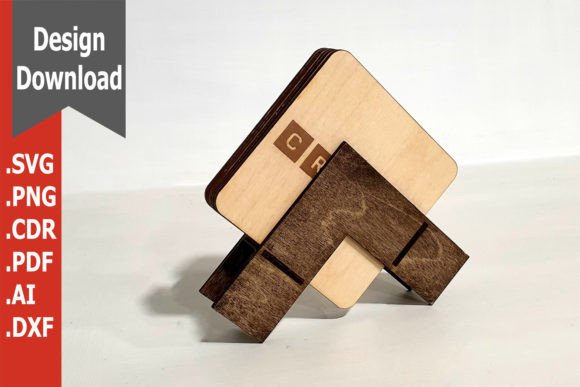
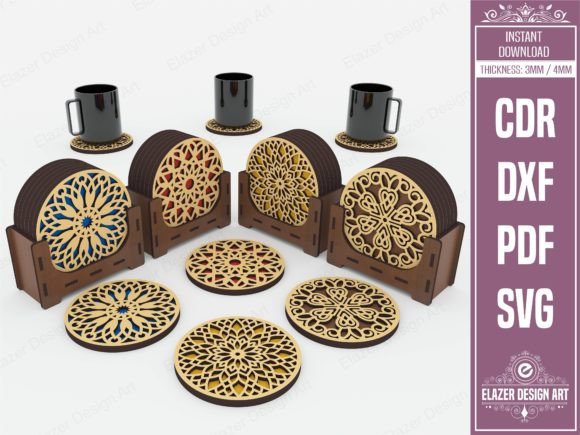
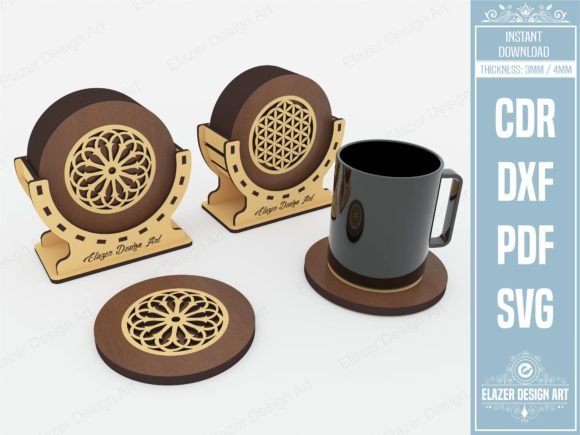
I tested the Decorative Boxed Coasters Laser Cut Svg across several mockups before committing to the concept. The coaster dimensions of 90x90mm sit perfectly within standard drinkware proportions, while the box enclosure at 105x54x70mm creates a satisfying container silhouette. What impressed me was how the file structure anticipated material thickness — prepared for 3mm and 4mm material, which covers the most common plywood and acrylic stocks used in small-batch production. That kind of practical foresight matters when you are designing for a brand that actually manufactures physical products.
The visual weight distributes evenly across the composition. The outer box frame provides a strong structural boundary, while the internal coaster design maintains breathing room. This matters enormously for brand identity applications. When a logo or monogram sits inside a coaster design, it needs surrounding negative space to feel considered rather than cramped. This asset delivers that spatial confidence.
Where the Design Files Excel in Production
From a laser cutting perspective, the linework reads clearly. I imported the DXF and CDR formats into both LightBurn and CorelDRAW to verify path continuity. The nodes connect cleanly, and the engrave versus cut separation is immediately apparent. For anyone running a creative marketplace or an Etsy product line, this file quality reduces the friction between download and finished piece. You spend less time troubleshooting vectors and more time dialing in power and speed settings.
I also appreciate that the file does not overcomplicate itself. Some decorative laser cut files pack in excessive detail that muddies the final result, especially on darker woods or opaque acrylics. This design understands restraint. The decorative elements punctuate rather than overwhelm, leaving room for the material itself to contribute visually — grain, texture, finish, all remain part of the story.
Packaging Design and Product Presentation
The boxed format opens up compelling packaging design possibilities. For the pottery studio, I used the coaster set as a value-add gift with purchase during their seasonal launch. The box itself became part of the unboxing experience. I designed a simple belly band with the studio's wordmark and let the laser-cut box stand as the hero element. The structural integrity of the 105x54x70mm box felt substantial enough to hold stacked coasters without appearing bulky — important for retail shelf presence and shipping practicality alike.
This asset also works beautifully as a product mockup base. I photographed the assembled box and coasters on linen and raw wood surfaces, then layered the studio's brand identity elements on top. The resulting images felt authentic rather than staged, which the client valued for their social media graphics and Instagram posts. Real product photography grounded in a well-designed physical object always outperforms purely digital mockups.
Expanding the Asset Across Brand Touchpoints
Beyond the primary packaging application, I explored how the Decorative Boxed Coasters Laser Cut Svg could inform other marketing visuals. The corner motif from the coaster design translated seamlessly into a repeating pattern for tissue paper, thank-you cards, and a Canva template for the client's email newsletter header. Extracting modular elements from a core design asset is a strategy I rely on heavily — it builds a cohesive visual language without requiring separate illustration purchases.
For the launch event, I used the coaster silhouette as a sticker design for kraft paper bags and as a subtle watermark on printed menus. The design held up well at different scales, though I did test carefully before committing to very small applications. At thumbnail sizes, the finer decorative details can soften, especially on textured paper stocks. I recommend printing a sample sheet at actual size before ordering bulk runs.
Testing the Design Across Different Media
One of my standard practices with any graphic design asset is running it through a series of stress tests. I previewed the vector files on both light and dark backgrounds. The design reads clearly on natural wood tones, white acrylic, and even dark walnut. The contrast holds up because the structural lines maintain enough thickness to register visually even when the decorative elements become more subtle.
I also tested the design in pure black and white. The laser cutting paths translate perfectly into a two-color printable design, which makes the asset viable for sublimation design, t-shirt design, and tote bag applications. The graphic does not rely on gradients or shading, so it reproduces cleanly across screen printing, heat transfer, and direct-to-garment processes. That versatility matters for print-on-demand sellers who need files that perform consistently across multiple product types.
Font Pairing and Visual Hierarchy
I paired the coaster design with a serif logotype for the pottery studio, and the combination felt grounded and intentional. The decorative geometry of the file complements serif fonts beautifully — the shared attention to detail creates a harmonious rhythm. I also tested it alongside a clean sans serif, a flowing script, and a condensed display font. The sans serif pairing created a more contemporary gallery feel, while the script felt too soft against the structured geometry. The display font worked well for headlines but competed for attention when placed too close to the decorative elements.
For editorial design and blog visuals, I recommend using this asset as a framing device rather than a background element. The coaster outline can contain text, images, or white space, giving your layout a defined structure without adding visual noise. In web design contexts, the boxed coaster motif works effectively as a content module container — a visual trick that reinforces brand consistency across digital and physical touchpoints.
Commercial Licensing and Practical Considerations
Before integrating any design asset into a client project, I verify commercial license terms. For this file, the standard commercial use permissions cover the types of applications I needed — finished physical products, packaging, and promotional materials. If you plan to resell the digital file itself or include it in a design bundle, you will need to confirm extended licensing separately. This is standard practice across creative marketplace platforms, but many newcomers overlook it until a licensing issue arises.
The file formats provided — CDR, DXF — cover the core needs for laser cutting software and vector editing. I imported the DXF into Adobe Illustrator without issues, and the CDR opened natively in CorelDRAW with all layers preserved. If you work primarily with SVG files for Cricut project workflows, you may need to convert from DXF, but the path data transfers cleanly. I tested the conversion and found no broken paths or scaling artifacts.
Where the Asset Performs Best
This design shines in applications that give it room to breathe. Packaging details, hero graphics, product mockups, and decorative accents all benefit from the structured elegance of the file. Event collateral — table numbers, place cards, menu holders — would lean into the dimensional quality of the laser-cut output. A handmade business specializing in home goods, candles, or specialty foods would find a natural fit here.
The boxed coaster set also works as a standalone product for digital sellers and crafters. The files are production-ready out of the download, and the demand for decorative coaster sets remains steady across Etsy and similar platforms. Seasonal variations — holiday markets, wedding season, housewarming gifts — create multiple selling windows throughout the year.
Where Caution Is Warranted
I would avoid placing this design in extremely small sizes, particularly below 30mm in any dimension. The decorative corner details lose definition at that scale, especially on materials with pronounced grain or texture. Crowded layouts with multiple competing visual elements also diminish the impact — the coaster design works best when it anchors a composition rather than fighting for attention within it.
For minimalist branding or professional corporate materials, this asset may feel too decorative. The ornamentation, while restrained, still carries a crafted sensibility that conflicts with stark, ultra-modern aesthetics. If your client's visual hierarchy demands absolute cleanliness and zero embellishment, look for a simpler geometric option. The file also requires testing on low-contrast backgrounds — light wood on cream paper, for example — to ensure the engraved lines remain visible in the final product.
Final Practical Notes for Designers
Before sending this to a client or launching a product line, run through a checklist. Test the cut settings on your specific material — 3mm birch plywood behaves differently than 3mm acrylic, and the file's line weights may need slight adjustment. Print a paper proof and check the scale against your intended packaging. Preview the design on real mockups rather than relying on screen previews alone. The dimensional quality of a laser-cut object does not fully translate on a flat display.
Check the transparency handling if you export to PNG for social media graphics or Pinterest pins. The cut paths should separate cleanly from the background. Verify the vector editability in your preferred software before committing to a production timeline. And confirm the commercial license covers your specific use case — client work, product sales, or inclusion in a design bundle all carry different licensing requirements.
The Decorative Boxed Coasters Laser Cut Svg delivers exactly what a thoughtful small business branding project needs: a production-ready asset that balances decoration with function, performs reliably across multiple applications, and elevates the final product without demanding center stage. For the pottery studio, the client reaction said everything — the moment they held the assembled box and coasters, the design stopped being a file on a screen and became part of their brand story. That is the outcome every designer hopes for when selecting a creative design asset for real client work.